Personal memory · Christmas 1983
The Christmas the future came home.
I was fifteen when my father placed a small box beneath the tree and quietly changed the direction of my life.
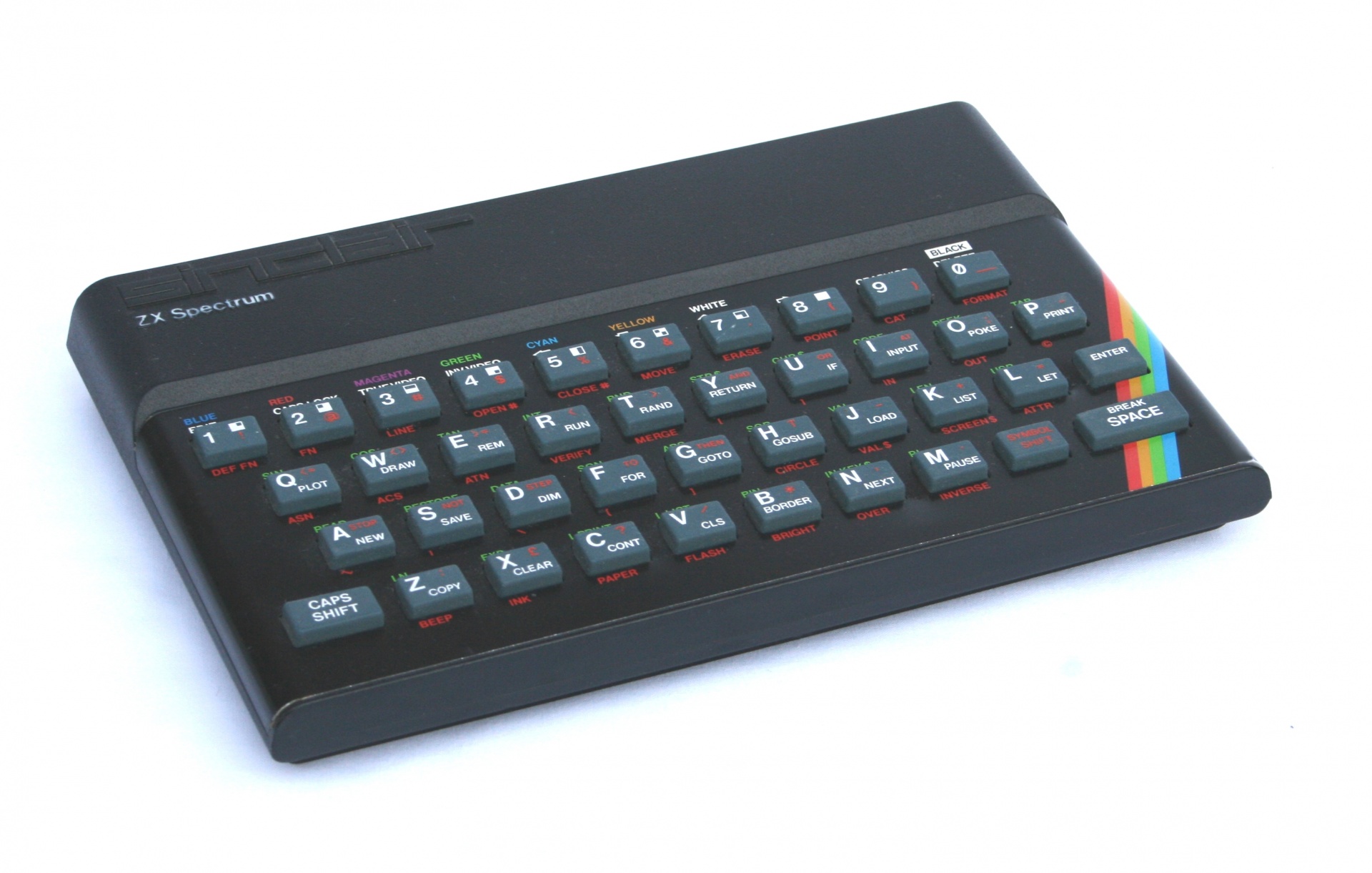
I was fifteen that Christmas, an age when you pretend you have outgrown presents. I answered my parents with shrugs, spent too long in my room, and treated family traditions as if they belonged to childhood. Yet on Christmas Eve I still watched the space beneath the tree while the coloured lights reflected in the dark window. There were socks, books and two parcels for my younger sister. Nothing resembled the one thing I wanted.
For nearly a year, that one thing had followed me everywhere. It stared from computer magazines at the kiosk: a small black machine with grey rubber keys and a rainbow flash. The Sinclair ZX Spectrum seemed like an object sent back from the future. I knew its specifications by heart—48 kilobytes of memory, colourful graphics, games loaded from cassette tapes. Once I had watched a friend’s machine load. The border flashed, the cassette screamed, and I thought it was the most beautiful sound I had ever heard.
My father knew about this obsession, although I had stopped asking months earlier. Money was not discussed openly, but children understand more than adults think. There were bills folded beneath the telephone, and my father’s coat had been repaired twice at the elbow. When I first showed him the advertisement, he studied it and asked, “What would you do with it?”
“Everything,” I had replied.
He smiled at the size of my answer, handed back the magazine and said nothing more.
The smallest parcel
After dinner that Christmas Eve, my father disappeared into the bedroom. He returned carrying a rectangular parcel wrapped in brown paper rather than festive paper. It was small—far too small, I thought—and he placed it on the table instead of under the tree. My name was written on it in his careful capital letters.
“This is for all of us,” he said, “but mostly for you.”
I remember the sound of the paper more clearly than the carols playing on the radio. Beneath it was a black box with the familiar white letters: Sinclair ZX Spectrum Personal Computer. For several seconds I did not understand what I was seeing. The magazine photograph had become a real object in our living room. My mother laughed because I had gone completely silent. My sister asked whether it was a game. I looked at my father, but he was looking down at the box, pretending to inspect one corner of the lid.
“It is the 48K one,” he said. “The man in the shop said that matters.”
I threw my arms around him with the sudden force of a much younger child. He smelled of tobacco, winter air and the soap he used before dinner. At fifteen I had become careful about affection, especially with my father. We shook hands more often than we embraced. But that night I held on to him, and he patted my back twice, awkwardly at first, then firmly.
Only years later did I learn that he had saved money every week since spring. He visited the shop three times, asking questions he barely understood so he would not buy the wrong model. While I assumed he had forgotten my answer—“Everything”—he had quietly been making room for it in our lives.
The television becomes a computer
We cleared the table beside the television. The Spectrum emerged from its polystyrene cradle, lighter than seemed possible. I touched the rubber keyboard while my father unfolded the leads. Neither of us admitted that we did not know what to do next.
Our television had a stubborn tuning dial. I connected the leads and saw only snow. I turned the dial too quickly and lost the signal. My father crouched beside me and moved my hand away.
“Slowly,” he said. “Machines tell you where the problem is, if you are patient enough to listen.”
That was his philosophy for engines, radios, dripping taps and, apparently, computers. He rotated the dial millimetre by millimetre until the snow folded into a pale grey rectangle. At the bottom appeared a single word: Sinclair.
Everyone cheered. It was only a word, but it felt as if the television had opened a secret door.
A demonstration cassette came with the computer. We borrowed my sister’s tape recorder, connected the cable and followed the instructions. I pressed J, then held Symbol Shift and pressed P twice. The command appeared:
LOAD ""
The recorder began. Coloured bars surrounded the screen, and the room filled with whistles, crackles and metallic cries. My mother covered her ears. My sister laughed. My father leaned closer as if listening to a distant radio station.
Then the tape stopped, and an error message appeared.
My happiness collapsed at once. Perhaps the machine was defective. Perhaps I had broken it in the first ten minutes. My father, however, remained on his knees beside the recorder.
“Again,” he said.
We rewound the tape. He cleaned the cassette head and adjusted the volume. The second attempt failed too. On the third, nobody spoke. The coloured border flashed for what seemed like an hour, and then a picture filled the screen. Crude by today’s standards, it was brilliant to us: colour and movement summoned from a cassette.
My father stood up slowly, rubbing his knees. “There,” he said, with the satisfaction of a man who had personally repaired the future.
A message in BASIC
Long after midnight, when the plates had been cleared and the apartment was quiet, I returned to the Spectrum. The manual lay open at the chapter on BASIC. Games had been the dream, but the blank screen now offered something even more powerful: the possibility that I could make the machine do something of my own.
I pressed keys cautiously. The Spectrum did not require typing commands letter by letter; each key held entire BASIC words. I made mistakes, deleted them and began again. Eventually I entered two lines:
10 PRINT "MERRY CHRISTMAS, DAD"
20 GOTO 10
I typed RUN. The message repeated down the screen until every line carried the same words. I sat watching them scroll, green and white and red, ridiculously proud of a program that any experienced owner could have written in seconds.
Behind me, the floorboard creaked. My father stood in the doorway in his dressing gown.
“You should be asleep,” he said.
Then he saw the television.
He read the message as it filled the screen. For a moment he did not say anything. His face changed in a way I had rarely seen—his expression softened, and he looked both happy and slightly embarrassed by his happiness. He put one hand on my shoulder.
“So,” he said quietly, “you have already made it speak.”
“It is only two lines.”
“Most important things begin small.”
What the gift became
During the months that followed, the Spectrum occupied the centre of my world. I copied programs from magazines and hunted for missing commas when they failed. I learned how numbers became colours, how loops created motion, and how patience could solve a problem that first looked impossible. I played games too, but my father was more interested in the programs I wrote.
He sat beside me after work and asked what each line did. I wrote a small program to total household expenses. It was slower than his pencil, but he used it anyway. He supplied the figures while I typed, and we spoke without the tension that often exists between fathers and teenage sons. The computer gave us an easier way to be together.
Years passed. Larger machines replaced the Spectrum, and work eventually took me into rooms full of computers my fifteen-year-old self could not have imagined. Yet none of them ever seemed as miraculous. They were faster, quieter and immeasurably more powerful, but they arrived as tools. The Spectrum arrived as a promise.
I still have it. The box is worn at the edges, and one corner has been repaired with the yellowing tape my father applied when it first split. Inside lies the manual with his handwriting on the back page: the correct tuning position for our old television, the cassette volume that worked best, and a note reminding us to unplug the power supply before connecting anything. When I lift the computer from its box, I do not first remember the games. I remember him kneeling beside the tape recorder, refusing to let the failed load be the end of the evening.
My father believed he was giving his fifteen-year-old son a computer for Christmas. What he really gave me was evidence that he had listened. He gave me permission to be curious, confidence that difficult things could be understood, and a glimpse of a future I would eventually make my own. Above all, he gave us those evenings together—two people from different generations leaning toward the same glowing screen.
Whenever I see the rainbow stripe of a ZX Spectrum, I am back in that room. The tree lights are reflected in the window. A cassette is screaming into memory. My father’s hand rests on my shoulder, and the television fills again and again with the first message I ever wrote for someone else:
MERRY CHRISTMAS, DAD.